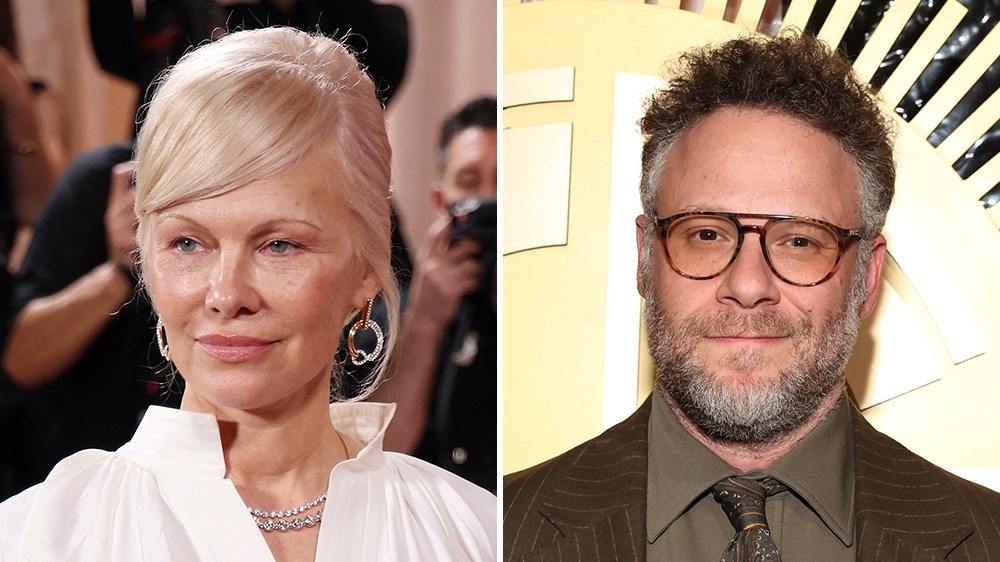

In a revelation that sends shivers down the spine of Hollywood's polite facade, Pamela Anderson has unequivocally stated her profound discomfort and outright disgust at being in proximity to Seth Rogen at the recent Golden Globes. Speaking with Andy Cohen during a SiriusXM radio interview, Anderson didn't mince words, describing the experience as 'yucky' and demanding an apology. This isn't just about an awkward awards show moment; it's a chilling echo of a past trauma, brought vividly back to life by the very people who capitalized on it.
For fans of ScreamDesk, this isn't merely celebrity gossip; it's a real-life horror story unfolding in plain sight. Imagine being confronted by the architects of a narrative you vehemently opposed, a story that plundered your most vulnerable moments for entertainment. That's the unsettling reality Pamela Anderson confronted, and her candid remarks crack open a deeper conversation about consent, exploitation, and the lingering specter of celebrity biopics.
The Lingering Shadow of 'Pam & Tommy'
Anderson's visceral reaction stems directly from the critically acclaimed yet deeply controversial Hulu series, 'Pam & Tommy.' While praised for its performances and production, the show chronicled the unauthorized release of Anderson and Tommy Lee's infamous sex tape without Anderson's consent or participation. Pamela Anderson has consistently expressed her profound displeasure with the series, telling Variety that the show 'pissed me off' and calling it a 'cheap fake.' She viewed it as a re-exploitation of a traumatic event, a ghoulish resurrection of her darkest moments, packaged for public consumption.
Seth Rogen, a prominent figure in the entertainment industry, served as an executive producer on 'Pam & Tommy' and also had a supporting role as Rand Gauthier, the electrician who stole the tape. For Anderson, Rogen's involvement wasn't just professional; it was personal. His association with a project she felt so violated by clearly translated into her perception of his physical presence. The series, despite its success, left a haunting legacy for its subject, and Rogen, by extension, became an embodiment of that pain.
A 'Yucky' Encounter: Globes Drama Unfolds
The Golden Globes are meant to be a night of celebration, glitz, and glamour. But for Pamela Anderson, it became a nightmare scenario. Sitting near Seth Rogen, a man whose work directly contributed to a series that she felt exploited her, was evidently too much. Her description of the experience as 'yucky' isn't just a casual dismissal; it's a raw, unfiltered expression of discomfort and repulsion. It speaks volumes about the emotional weight she carries concerning the 'Pam & Tommy' series and the deep-seated resentment towards those involved.
This wasn't a fleeting glance; it was sustained proximity. The kind of situation that can make your skin crawl, your anxiety spike, and your blood run cold. While Rogen was there celebrating his own successes for his Apple TV comedy 'The Studio,' Anderson's focus remained squarely on the elephant in the room – the series that revisited her most vulnerable moments without her blessing. Her demand for an apology isn't just about decorum; it's a plea for recognition of the emotional toll the series exacted.
The Real-Life Horror of Stolen Narratives
Pamela Anderson's experience casts a chilling light on the broader ethics of biographical storytelling, especially in the age of streaming. How much right does Hollywood have to tell someone's story without their consent, particularly when that story involves deeply personal and traumatic events? Anderson's 'yucky' encounter highlights the very real, very human consequences when entertainment crosses into exploitation.
Her demand for an apology isn't just for a perceived slight at an awards show; it's a demand for accountability, for empathy, and for acknowledgment of the pain inflicted. It forces us to confront the unsettling question: are we, as consumers, complicit in consuming narratives that re-traumatize their subjects? In the world of ScreamDesk, we appreciate a good psychological thriller, but when the horror is real and the victim is still suffering, it's a far more disturbing spectacle. Pamela Anderson's stand reminds us that some wounds never truly heal, especially when they're continuously picked at for public entertainment.